E-Commerce SEO Guide 2026: The Complete Handbook for Online Store Optimization
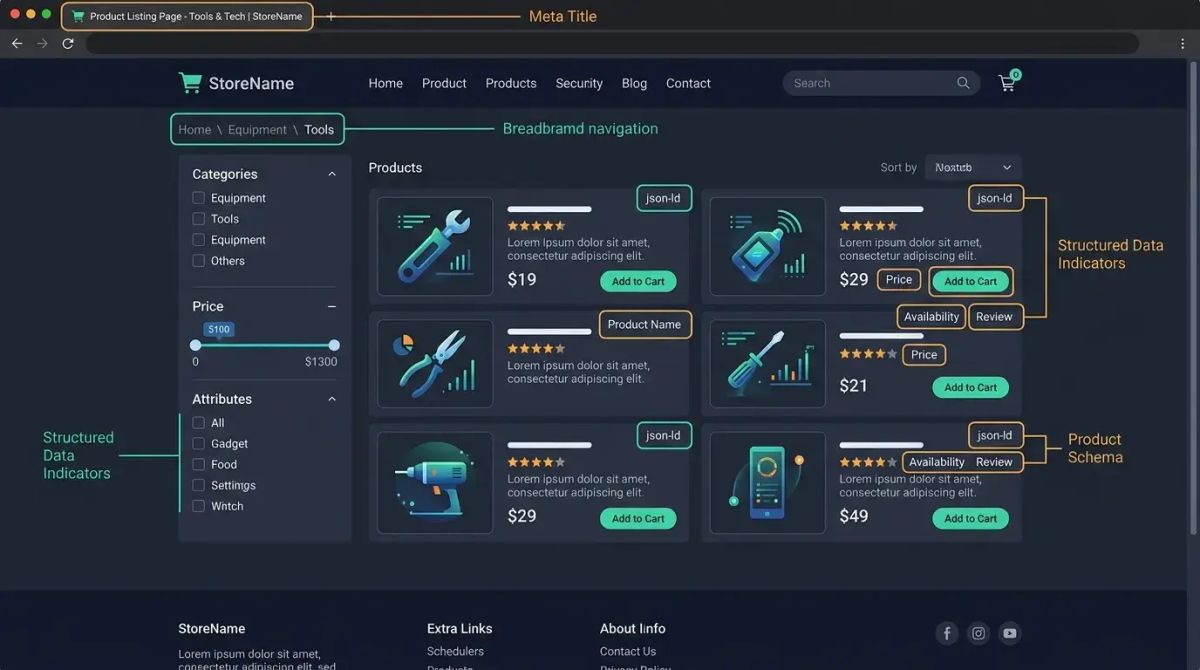
E-Commerce SEO Guide 2026: The Complete Handbook for Online Store Optimization
E-commerce websites face SEO challenges that are fundamentally different from those of standard blogs or corporate sites. Thousands of product pages, constantly changing inventory, complex filtering systems, and recurring duplicate content issues make e-commerce SEO a discipline of its own. In 2026, organic search remains the highest-converting traffic source for e-commerce sites. Research shows that organic search accounts for an average of 43 percent of e-commerce revenue. However, capitalizing on this potential requires an e-commerce-focused SEO strategy. In this guide, we will comprehensively cover all the strategies that will propel your online store to the top of search engine rankings.
Why E-Commerce SEO Is Different
The SEO requirements of a standard blog or corporate site and an e-commerce site are fundamentally different. Understanding these differences is the first step in developing the right strategy.
The Scale Challenge
An e-commerce site typically has thousands or even tens of thousands of product pages. Each product page needs unique, optimized content. This scale makes manual optimization nearly impossible and demands systematic approaches. SEOctopus's Keyword Discovery tool solves this scale problem by analyzing keyword opportunities for thousands of products in bulk.
Constantly Changing Content
Products come in and go out of stock, prices change, seasonal campaigns launch and end. This dynamic nature directly affects how search engines index your site. How to manage out-of-stock product pages, what to do with seasonal products during off-peak periods — these are e-commerce-specific SEO decisions.
Transactional Intent
E-commerce search queries typically carry high transactional intent. Users search with terms like "buy," "price," "shipping," and "discount." Correctly understanding and fulfilling this intent on your pages directly impacts conversion rates. Blog content should surface for informational queries, while product and category pages should rank for transactional ones.
Technical Complexity
Faceted navigation, parameter-based filtering, pagination, canonical tag management, hreflang implementation, and crawl budget optimization become far more critical and complex on e-commerce sites. SEOctopus's Technical Audit module automatically identifies these technical issues and provides prioritized resolution recommendations.
Product Page Optimization
Product pages are the fundamental revenue-generating units of e-commerce sites. Every product page must be optimized for both search engines and users.
Product Titles (Title Tags)
Your product titles are the first element visible in search results and directly impact both ranking and click-through rate.
- Use the Brand + Product Name + Key Feature format. For example: "Nike Air Max 270 Men's Running Shoes - Black/White"
- Keep titles between 50 and 60 characters. Longer titles get truncated in search results.
- Place the primary keyword near the beginning of the title.
- Create a unique title for every product. Even when using templates, highlight distinguishing features.
- Avoid filler words. Instead of generic terms like "Sale," "Cheap," or "Best," specify concrete attributes.
Product Descriptions
Product descriptions are critical both for influencing purchase decisions and for communicating page relevance to search engines.
- Write unique content. The most important rule is to avoid copying the manufacturer's standard description. Hundreds of sites selling the same manufacturer's products use identical descriptions, creating duplicate content issues.
- Aim for a minimum of 300 words per description. Longer, more detailed descriptions perform better for both rankings and conversions.
- Naturally incorporate secondary keywords, synonyms, and related terms throughout the content.
- Create a mixed format using bullet points for technical specifications and paragraphs for use cases and emotional benefits.
- Answer the questions customers most frequently ask: materials, dimensions, care instructions, warranty, and return policies.
Product Images and SEO
Images are among the most influential elements on e-commerce sites for user purchase decisions. They also represent a significant additional traffic source from image search engines.
- File naming: Use descriptive, hyphen-separated, lowercase file names. Instead of "IMG_4521.jpg," use "nike-air-max-270-black-mens-running-shoes.jpg."
- Alt text: Write unique, descriptive alt text for every image. Alt text should directly describe what the image shows. Avoid keyword stuffing.
- Format and size: Prioritize the WebP format. Keep images under 100KB. Implement lazy loading to maintain page load speed.
- Multiple angles: Provide multiple angle shots for every product. Different angles help users understand the product better and increase time on page.
- Zoom functionality: Add zoom capability but ensure that JavaScript-based zoom does not create content invisible to search engines.
User Reviews and Ratings
User reviews are an extremely valuable content source for e-commerce SEO. Reviews naturally add long-tail keywords to the page and continuously refresh content, sending freshness signals.
- Keep your review system active and encourage customers to leave reviews. Request reviews through post-purchase emails.
- Do not delete negative reviews. They provide credibility and can match long-tail search queries.
- Mark review content with schema markup to display star ratings in search results.
- Add a Q&A section where users can ask and answer product-related questions.
Category Page Optimization
Category pages on e-commerce sites typically have higher ranking potential than product pages because they can target broader, more competitive keywords.
Category Page Structure
- Unique introductory text: Every category page should have at least 200 to 300 words of unique introductory text. This text should describe what the category contains, what products can be found, and how to make a selection.
- Category heading (H1): Use a keyword-focused but natural H1 heading. For example: "Men's Running Shoes" or "Organic Baby Clothing Collection."
- Subcategory links: Provide clear, visible links to relevant subcategories. This improves both user experience and search engine crawl efficiency.
- Filter summary: Mention the available filtering options (color, size, price range, brand) textually within the page content.
Category Content Strategy
SEO content added above or below product listings on category pages can significantly improve ranking performance when done correctly.
- Add a detailed guide section at the bottom of the page. For example, a "Men's Running Shoes" category could include a shoe selection guide, recommendations by terrain type, and fit advice.
- Content must add genuine value to the user. Content added solely for keyword stuffing both ruins user experience and gets flagged as thin content by search engines.
- SEOctopus's On-Page Checker tool identifies content gaps on your category pages and provides comparative analysis against competitors' similar pages.
Site Architecture for E-Commerce
Site architecture determines the path both users and search engines take to reach the products on your site. Proper architecture uses crawl budget efficiently and distributes link equity effectively.
Flat vs Deep Architecture
- Flat architecture structures the site so that every page is reachable from the homepage within a maximum of 3 clicks. This is the ideal approach for e-commerce sites. Flat architecture ensures more equitable link equity distribution and allows search engines to easily access all pages.
- Deep architecture places pages 4 to 5 or more levels deep. In this structure, link equity reaching deeper pages diminishes and search engines struggle to discover these pages.
- The ideal e-commerce structure should have no more than 3 levels of depth: Homepage → Category → Subcategory → Product.
- Add breadcrumb navigation to help both users and search engines understand your site hierarchy.
URL Structure
A clean and consistent URL structure is critical for e-commerce sites.
- Make a strategic decision about whether to reflect category hierarchy in URLs. Hierarchical URLs like /men/shoes/running/ convey structure but require URL changes if a product's category changes.
- Avoid special characters and space encodings in URLs. Use hyphen-separated, lowercase URLs.
- Manage parameter-based URLs (such as ?color=red&size=42) with canonical tags.
Product Schema Markup
Structured data provides search engines with precise information about your product pages and enables rich results display in search results. Price, availability, rating, and review count displayed directly in search results significantly increase click-through rates.
Product Schema
Product schema is the foundational structured data type that should be implemented on every product page. Always include these properties:
- name: Product name
- description: Product description
- image: Product image URL
- sku: Stock keeping unit code
- brand: Brand information (with Brand schema)
- offers: Price and availability information (with Offer schema)
- aggregateRating: Average rating and review count (with AggregateRating schema)
Offer Schema
Offer schema contains the product's pricing and purchasing information.
- price: Product price
- priceCurrency: Currency (USD, EUR, GBP)
- availability: Stock status (InStock, OutOfStock, PreOrder)
- priceValidUntil: Price validity date (especially for discounted products)
- seller: Seller information
- shippingDetails: Shipping information
AggregateRating Schema
- ratingValue: Average score (for example 4.5)
- reviewCount: Total number of reviews
- bestRating: Highest possible score (typically 5)
- worstRating: Lowest possible score (typically 1)
When these schema types are implemented together, price, stock status, star rating, and review count are displayed in search results. This rich presentation can increase organic click-through rates by up to 30 percent. SEOctopus's Technical Audit tool validates your schema markup implementation and reports missing or incorrect fields.
Faceted Navigation and Crawl Budget
Faceted navigation (multi-filter systems) is one of the biggest technical SEO challenges for e-commerce sites. Filtering options like color, size, price range, brand, and material can generate a separate URL for every combination, leading to URL explosion.
Faceted Navigation Problems
- Crawl budget waste: Search engine bots have a limited crawl budget. When thousands of filter combination URLs are generated, bots spend time crawling low-value filter pages instead of crawling important pages.
- Duplicate content: Different filter orderings can display the same product list but generate different URLs. For example, ?color=red&size=42 and ?size=42&color=red show the same results but create two different URLs.
- Thin content: Very specific filter combinations sometimes generate pages listing only 1 or 2 products. These pages are evaluated as low quality by search engines.
Solution Strategies
- Canonical tags: Point all filter URL variations to the unfiltered main category page using canonical tags. This tells search engines which page is the primary version.
- Robots meta tags: Mark filter pages that should not be indexed as noindex, follow. This preserves link equity while removing unnecessary pages from the index.
- Robots.txt: Block certain filter parameters with robots.txt. Use this method carefully, however, as it does not affect existing indexation and can block link equity flow.
- AJAX-based filtering: Implement filtering without URL changes using AJAX. However, create static URLs for filter combinations with SEO value (such as "black men's running shoes").
- Selective indexing: Create dedicated landing pages for high-search-volume filter combinations. Remove low-volume combinations from indexation.
Managing Out-of-Stock and Seasonal Products
Product availability changes constantly. Managing out-of-stock and seasonal products is one of the most important topics in e-commerce SEO.
Out-of-Stock Products
- Temporarily out of stock: If the product will return to stock, keep the page live. Add a "Notify me when back in stock" option. Update the availability value in schema markup to OutOfStock. Do not delete or redirect the page.
- Permanently out of stock: If the product will never be sold again and the page has organic traffic or backlink value, implement a 301 redirect to the nearest alternative product or parent category. For pages without transferable value, return a 410 Gone status code.
- 301 redirect strategy: Choose the redirect target that most closely matches the out-of-stock product's keyword target. Avoid random redirects.
Seasonal Products
- Keep seasonal product pages live year-round. Do not change the URL to preserve page authority and backlink value.
- During the off-season, update the page with a message like "This product is currently out of season. Sign up to be notified for the upcoming season."
- Provide recommendations linking to related alternative products.
- Update content dates to send freshness signals.
Duplicate Content Issues
Duplicate content is one of the most common SEO problems for e-commerce sites. Having the same or very similar content across multiple URLs prevents search engines from determining which page to rank and causes ranking power to split.
Common Duplicate Content Sources
- Filter and sort parameters: Parameters like ?sort=price-asc and ?filter=red create the same content at different URLs.
- Pagination: Pages like /category?page=1 and /category?page=2 split product listings, creating separate URLs for each page.
- Product variants: Creating separate URLs for different colors, sizes, or configurations of the same product results in very high content similarity between pages.
- Protocol and www differences: All versions being accessible across http/https and www/non-www.
- Manufacturer descriptions: Identical manufacturer descriptions used across multiple sites.
- Print-friendly pages: Pages with a /print/ extension.
Solution Strategies
- Canonical tags: Use canonical tags on every page specifying the preferred URL. This is the most fundamental and effective solution.
- Unique content: Write unique content for every product page beyond the manufacturer's standard description.
- Parameter management: Properly define URL parameters in Google Search Console.
- Hreflang: Use hreflang tags for multi-language or multi-region implementations to prevent international duplicate content issues.
- Pagination with rel=next/prev: Indicate that pages in a pagination series are connected to each other.
Internal Linking Strategy
Internal linking is critically important for e-commerce sites to distribute link equity, improve user experience, and enhance search engine crawl efficiency.
E-Commerce-Specific Internal Linking Techniques
- Related products: Add "Customers who bought this also bought" or "Similar products" blocks to every product page. These blocks increase user engagement and distribute link equity to related pages.
- Cross-sell links: Link to complementary products. For example, on a laptop page, add links to bags, mice, and keyboards.
- Breadcrumb navigation: Breadcrumbs are extremely valuable for both user experience and internal link structure. Enrich them with schema markup to display in search results.
- Category content links: Within category page description text, link to relevant subcategories and featured products.
- Blog-to-product connections: Add natural links from your blog content to relevant product and category pages. For example, in a "running shoe selection guide" article, link to the running shoes category.
- Footer links: Link to popular categories and campaign pages from the footer, but keep the footer link count at a reasonable level.
SEOctopus's On-Page Checker tool analyzes your internal link structure, identifies orphan pages (pages receiving no internal links), and provides link distribution recommendations.
Image SEO for Products
On e-commerce sites, images are a fundamental component of both user experience and SEO. Traffic from Google Images search can be a significant source for e-commerce sites.
Image Optimization Checklist
- File names: Use descriptive, hyphen-separated, lowercase file names.
- Alt text: Write unique, descriptive alt text of no more than 125 characters for every image.
- Format: Prioritize WebP format. AVIF support is also growing but check browser compatibility.
- Size optimization: Keep images under 200KB. Large images negatively impact page speed.
- Lazy loading: Implement lazy loading for images below the fold to improve initial load time.
- CDN: Serve images through a CDN (Content Delivery Network) to reduce load times.
- Responsive images: Use srcset and sizes attributes to serve appropriately sized images for different screen sizes.
- Image sitemap: Add your images to an XML sitemap to facilitate search engine discovery.
International E-Commerce SEO (Hreflang)
For e-commerce sites operating in multiple countries or languages, hreflang tags ensure that the correct content is shown to the correct audiences.
Hreflang Implementation Rules
- Add hreflang tags to every page's HTML head section or XML sitemap.
- Mark all language and region variations reciprocally. If page A references B, page B must also reference A.
- Use the x-default tag to specify the default language/region page.
- Hreflang codes must conform to ISO 639-1 (language) and ISO 3166-1 Alpha 2 (country) standards.
- Ensure canonical URLs and hreflang URLs are consistent. Do not add hreflang to a page whose canonical tag points to another page.
Additional International E-Commerce Strategies
- Currency and pricing: Display prices in the local currency for each region and use the correct currency code in schema markup.
- Local reviews: Display user reviews in the local language for each region.
- Regional stock status: Properly manage and display products' regional availability.
- Local keyword research: Conduct separate keyword research for each language and region. Direct translation is insufficient for keyword strategy. SEOctopus's Keyword Discovery tool enables keyword research in over 30 languages and 50 countries.
E-Commerce Content Marketing
Content marketing is the most effective method for e-commerce sites to expand organic reach, build brand authority, and attract traffic from informational searches.
Content Types
- Shopping guides: Comprehensive guides like "Top 10 Running Shoes 2026" or "Baby Stroller Buying Guide" target top rankings in informational searches and draw users into the purchase funnel.
- Product comparisons: Comparison content like "Nike vs Adidas Running Shoes" targets users at the decision stage.
- How-to content: Usage guides, care instructions, and tips related to your products.
- Trend analyses: Content analyzing industry trends and providing recommendations.
- Customer stories: Content sharing customer experiences and success stories.
Building Bridges Between Blog and Product Pages
Position your blog content not as an isolated information source but as an integral part of the purchase funnel. Add strategic links from every blog post to relevant product and category pages. For example, in a "Best Winter Outdoor Jackets" blog post, link each mentioned jacket to its respective product page.
Conversion Rate Optimization Meets SEO
SEO and conversion rate optimization (CRO) are not independent disciplines. Rather, they are complementary strategies that reinforce each other.
Where SEO and CRO Intersect
- Page speed: Fast-loading pages both rank better in search engines and achieve higher conversion rates. Every 1-second delay can reduce conversion rates by 7 percent.
- Mobile friendliness: Mobile-first indexing means mobile experience is critical for both ranking and conversion.
- Content quality: Detailed content that satisfies users both ranks well in search engines and facilitates purchase decisions.
- User experience signals: Metrics like low bounce rate, high time on page, and high pages per session indicate both SEO and CRO success.
- Trust signals: SSL certificates, customer reviews, security badges, and clear return policies build trust for both search engines and users.
CRO Improvements That Yield SEO Gains
- Add clear and persuasive CTAs (Calls to Action). The "Add to Cart" button should be visible and attention-grabbing.
- Include social proof elements (review count, purchase count, favorite count) on product pages.
- Design a fast and easy checkout process. Complex checkout processes both lower conversion rates and cause users to abandon the site.
- Use A/B testing to test different page layouts, heading formats, and CTA placements.
Frequently Asked Questions
What is the most important SEO factor for e-commerce sites?
There is no single "most important" factor in e-commerce SEO; success requires a holistic approach. However, the technical foundation (site speed, crawl efficiency, schema markup) forms the base. Unique product content, strong internal linking, and user experience are built on top. SEOctopus's Technical Audit tool helps you keep this technical foundation under control.
Is it realistic to write unique descriptions for thousands of products?
Yes, but it requires a strategic approach. Rather than investing equal effort in all products, prioritize those with the highest traffic and revenue potential. Create templates and populate product-specific variables to build an efficient process. Avoid fully auto-generated content; search engines can detect such content.
Should I delete out-of-stock product pages?
No, deleting out-of-stock product pages is generally the wrong approach. If the page receives organic traffic or has backlinks, you lose that value. For temporary out-of-stock situations, keep the page live and offer a stock notification option. For permanently discontinued products, implement a 301 redirect to the nearest alternative.
How can I make faceted navigation SEO-friendly?
The key to faceted navigation management is determining which filter combinations should be indexed. Create indexable URLs for high-search-volume combinations (such as "black men's running shoes"). Manage other combinations with canonical tags, noindex, or AJAX-based filtering. Use robots.txt and meta robots together to protect crawl budget.
Does an e-commerce site need a blog?
Absolutely yes. A blog enables e-commerce sites to gain visibility in informational searches, build brand authority, and earn backlinks. Additionally, blog content is the most effective tool for attracting users at the top of the purchase funnel to your site. What matters is strategically connecting blog content to product and category pages.
Is hreflang sufficient for international e-commerce SEO?
Hreflang is an important technical element but is not sufficient on its own. Local keyword research, local currency and pricing, local content adaptation, local backlink strategy, and local user reviews are also required for each region. While hreflang tells search engines to show the right content to the right audience, that content and experience must match the local market's expectations. SEOctopus's Keyword Discovery tool allows you to compare search volumes and competition levels across different regions.
Why is page speed so important for e-commerce sites?
Page speed directly impacts revenue for e-commerce sites. Research shows that every 100-millisecond improvement in page load time can increase conversion rates by 1 to 2 percent. Additionally, Google uses Core Web Vitals as a ranking factor. Slow-loading pages mean both lower search rankings and customer loss. Image optimization, lazy loading, CDN usage, and server response time improvement should be addressed as priorities.