Perplexity SEO Guide 2026: How to Get Your Brand Cited in AI Search
Perplexity SEO Guide 2026: How to Get Your Brand Cited in AI Search
AI-powered search engines are fundamentally reshaping how users discover and consume information online. Among the most influential players in this transformation is Perplexity AI, a platform that delivers direct, sourced, and contextual answers rather than the traditional list of blue links. For brands and content creators, this shift creates an entirely new visibility landscape that demands specialized optimization strategies. In 2026, limiting your SEO efforts to Google alone means ignoring a rapidly growing segment of search behavior.
This comprehensive guide covers how Perplexity AI works, how it selects and cites sources, what strategies will get your brand consistently referenced in Perplexity answers, and how you can measure and optimize your Perplexity visibility using SEOctopus tools.
What Is Perplexity AI and How Does It Work?
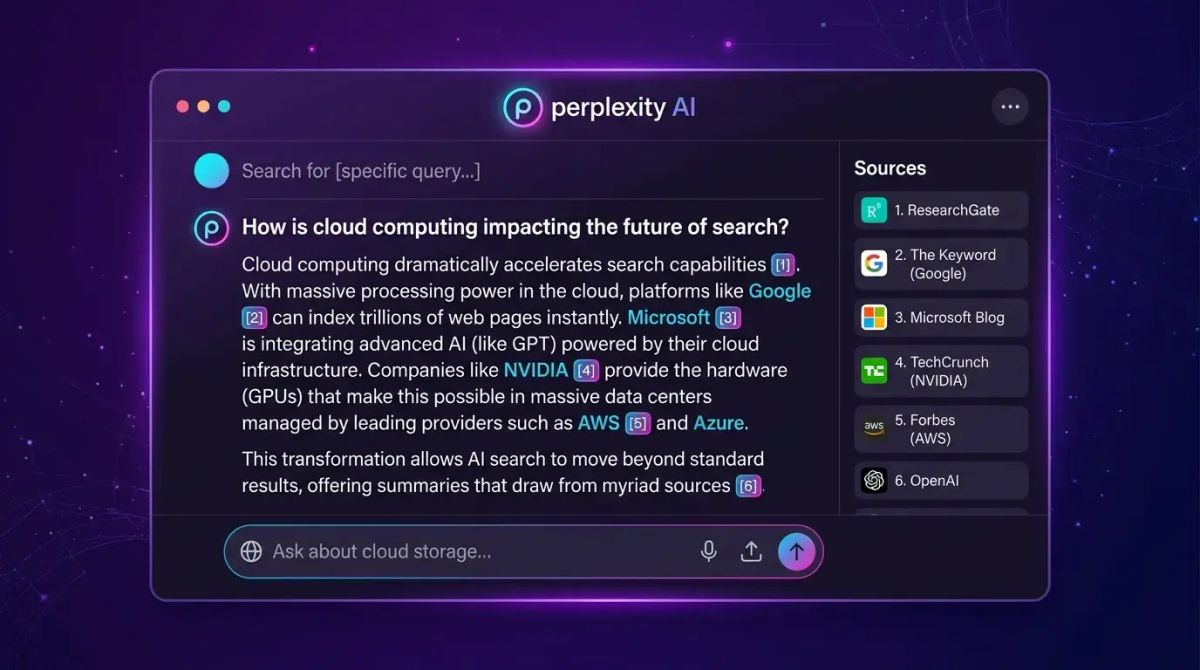
Perplexity AI is an AI-powered search engine founded in 2022 that has experienced explosive growth through its unique approach to information retrieval. Unlike traditional search engines that return a list of web pages for users to sift through, Perplexity generates direct answers to user queries and accompanies those answers with inline citations to its sources.
The platform combines large language models with real-time web search to produce responses that are both current and verifiable. When a user submits a query, Perplexity follows a multi-step process. First, it analyzes the query to understand the search intent and informational need. Then it conducts a real-time web search to gather relevant sources from across the internet. It synthesizes the information from these sources into a coherent, comprehensive response using its language model. Finally, it presents the response with numbered citations that link directly to the original sources.
This approach positions Perplexity as a hybrid between a search engine and a research assistant. Users receive synthesized, multi-source answers from a single query rather than having to visit multiple websites and compile information themselves.
How Perplexity Differs from Google
The fundamental difference between Perplexity and Google lies in the output format and user experience. Google presents users with a ranked list of web pages and lets them navigate to individual sites to find answers. Perplexity does the navigation and synthesis for the user, delivering a consolidated answer.
Google's ranking algorithm evaluates hundreds of factors including backlinks, page experience, keyword optimization, user behavior signals, and content freshness. Perplexity's source selection relies on fewer but more heavily weighted signals, with authority, recency, and structural clarity being paramount. In Google, a website appearing in organic results might receive a click-through rate between two and thirty percent. In Perplexity, being cited as a source carries significantly higher trust signals because the platform explicitly endorses the source's reliability.
How Perplexity Selects and Cites Sources
Understanding Perplexity's source selection mechanism is the key to achieving visibility on this platform. Every time Perplexity generates an answer, it performs real-time web crawling and selects the most appropriate sources based on multiple criteria.
Content Authority and Trustworthiness
Perplexity evaluates the overall authority of a source's domain when deciding whether to cite it. Sites that have been operating for a long time, consistently producing high-quality content, and receiving links from other authoritative sources are prioritized. For example, when answering a health-related question, Perplexity is far more likely to cite a recognized medical institution's website than a personal blog.
Content Freshness and Recency
One of Perplexity's greatest advantages over ChatGPT is its reliance on real-time web search. While ChatGPT's default behavior relies on its training data, Perplexity performs live web searches for every query. This makes content freshness a critical factor in source selection. Regularly updated content with recent publication or modification dates receives higher priority in Perplexity's source pool. Outdated or stale content falls behind when fresher alternatives are available.
Structural Clarity and Readability
Perplexity prefers content that is well-organized and structurally clear when extracting information for its answers. Content with proper headings, subheadings, lists, definitions, and logical flow is easier for the platform to parse and cite. This makes structured data implementation and content architecture especially important for Perplexity visibility.
Direct and Concrete Information
Perplexity favors content that provides specific, concrete data over vague or generalized statements. Statistics, numerical data, definitions, comparisons, and step-by-step instructions all increase the likelihood of citation. For example, a technology article that shares specific benchmark results is more likely to be cited than one that only provides general commentary.
Content Optimization Strategies for Perplexity
Achieving consistent visibility in Perplexity requires going beyond traditional SEO tactics. The following strategies will help your brand become a regular source in Perplexity's answers.
Create Authoritative and Comprehensive Content
Perplexity tends to cite the most comprehensive and trustworthy source on any given topic. Position your content as definitive, in-depth guides on specific subjects. Long-form content that covers a topic from every angle outperforms shallow, brief articles in Perplexity's source selection.
Every content piece should provide a clear definition of the core concept, explain why it matters, show how to implement it with step-by-step guidance, address common mistakes and their solutions, and support claims with current data and examples. SEOctopus's AI Brand Monitor feature lets you track which topics your competitors are being cited for in Perplexity, helping you identify content gaps and opportunities.
Adopt a Question-and-Answer Format
Since Perplexity inherently generates answers to user questions, content structured in a question-and-answer format has a natural advantage. Address frequently asked questions explicitly in your content. Use each question as a subheading and provide a clear, concise, and informative answer directly below it. This approach makes it significantly easier for Perplexity to extract information from your content.
Produce Data-Driven and Statistical Content
Perplexity prioritizes content backed by concrete data. Research findings, survey results, industry statistics, and comparative analyses all carry higher citation rates. Whenever possible, share original data in your content, use sourced statistics, and provide numerical comparisons. Original research and proprietary data are particularly valuable because they cannot be found elsewhere.
Include Definitional and Encyclopedic Sections
Perplexity frequently searches for concept definitions and explanations when constructing its answers. Including clear definitions at the beginning of your content or in relevant sections makes it easier for Perplexity to quote your definitions. For example, in a GEO optimization guide, providing a precise definition of Generative Engine Optimization in the opening paragraph increases the chances of citation.
Use Lists and Comparison Tables
Bulleted lists, numbered steps, and comparison tables support Perplexity's information extraction process. Present complex information in list format throughout your content. For instance, when comparing SEO tools, using a feature comparison table benefits both human readers and Perplexity's parsing capabilities.
Perplexity Spaces and Brand Opportunities
Perplexity Spaces is a feature the platform introduced in 2025 that has gained significant traction in 2026. Spaces allow users to create curated knowledge collections around specific topics. For brands, Spaces present valuable opportunities.
By creating a Perplexity Space related to your brand or industry, you can reinforce your authority position. Within your Space, you can organize your own content alongside industry resources, creating a curated knowledge hub. This approach delivers both direct visibility and signals to Perplexity's systems that your brand is an authoritative source on related topics.
You can track the impact of your Perplexity Spaces strategy using SEOctopus's GEO Monitor to measure how Space activity correlates with citation frequency.
Domain Authority Signals for Perplexity
Domain authority plays a significant role in Perplexity's source selection, but this authority extends beyond traditional backlink metrics. For Perplexity, domain authority encompasses multiple dimensions.
Editorial consistency is an important signal. Sites that maintain a consistent editorial standard are considered more trustworthy. Sites showing large fluctuations in content quality receive lower priority.
Topical expertise is another factor. Sites that produce deep, comprehensive content in a specific field have an advantage over sites that produce superficial content across many broad topics. Building a content portfolio that demonstrates niche expertise boosts Perplexity authority.
Citation history also matters. If Perplexity has previously used a site as a source successfully and user feedback indicates the source was helpful, the platform tends to cite that site again in future answers.
Social proof and mentions support authority as well. Sites that are properly referenced by other authorities and mentioned in reputable media carry stronger authority signals.
SEOctopus's Visibility Score feature measures your brand's overall authority level across different AI search engines and tracks changes over time.
Technical Requirements for Perplexity Compatibility
The technical dimension of Perplexity visibility cannot be overlooked. No matter how high-quality your content is, if your technical infrastructure is not up to standard, Perplexity cannot access or properly process your content.
Crawlability
Perplexity's web crawler must be able to access and read your content. Do not block PerplexityBot in your robots.txt file. Perplexity's crawler is identified as PerplexityBot, and you need to ensure open access for this bot. Additionally, keep your sitemap.xml file up to date to facilitate the discovery of new content.
Page Speed and Performance
Slow-loading pages negatively affect Perplexity's crawling process. Aim for page load times under two seconds. Optimize your Core Web Vitals metrics and avoid unnecessary JavaScript payloads that slow down content rendering.
Clean HTML Structure
Perplexity benefits from clean and semantic HTML when parsing page content. Use proper heading tags for your content hierarchy. Use appropriate HTML elements for paragraphs, lists, and tables. Implement Schema.org structured data to strengthen the semantic context of your content.
HTTPS and Security
Perplexity prefers sites that use secure connections. Sites without HTTPS are less likely to be selected as sources. Ensure your SSL certificate is current and that all pages are accessible via HTTPS.
Mobile Compatibility
Perplexity sees heavy usage from mobile devices and expects sources to be mobile-friendly. Use responsive design and optimize the mobile user experience to meet this requirement.
Optimization Differences: Perplexity vs Google vs ChatGPT
Each platform requires a different optimization approach. Understanding these differences is foundational to building a holistic digital visibility strategy.
Google SEO Focus
Google SEO emphasizes keyword optimization, backlink profiles, page experience, Core Web Vitals, and user behavior signals. Google uses hundreds of ranking factors and presents results as organic listings. Users visit different results and form their own conclusions.
ChatGPT Optimization
ChatGPT generates responses based on its training data and does not perform real-time web searches by default. Getting visibility in ChatGPT requires your content to be part of its training data, which typically means being published on high-authority sites, having existed for a significant period, and being widely referenced. When ChatGPT's search feature is actively enabled, the dynamics change, but the default behavior relies on training data.
Perplexity Optimization
Perplexity performs real-time web searches for every query, making fresh content production significantly more important. Content quality, structural clarity, and source reliability are paramount for Perplexity. Backlink profile has an indirect effect but carries less weight in Perplexity's source selection compared to Google. For Perplexity, your content must directly and clearly answer the user's question.
SEOctopus's GEO Monitor module enables you to compare results for the same query across Google, ChatGPT, and Perplexity simultaneously. This allows you to develop separate optimization strategies for each platform based on real performance data.
Measuring Perplexity Visibility with SEOctopus
SEOctopus provides a comprehensive suite of tools to measure and optimize your Perplexity visibility.
Query Tracking with GEO Monitor
SEOctopus GEO Monitor regularly checks whether your brand appears in Perplexity results for specific queries. By defining your target queries, you can track your brand's citation rate and positioning in these queries. Visualize changes over time with graphs and measure the impact of your optimization efforts.
Citation Analysis with Citation Tracker
SEOctopus Citation Tracker monitors how frequently and in what context your brand is cited in Perplexity answers. Analyze which of your content pieces get cited most often, which query types you are visible for, and how your performance compares to competitors.
Overall Performance with Visibility Score
SEOctopus Visibility Score consolidates your brand's visibility across all AI search engines into a single metric. Evaluate your performance across Perplexity, ChatGPT, Google AI Overviews, and other platforms holistically and track trends over time.
Brand Perception with AI Brand Monitor
AI Brand Monitor tracks what Perplexity says about your brand and how it positions you. Monitor whether your brand name is accurately represented, whether mentions are in a positive or negative context, and how your industry positioning compares to competitors.
Case Studies: Brands Succeeding in Perplexity
Examining brands that consistently appear as sources in Perplexity reveals common characteristics that drive success.
Brands with consistent content production perform better. Sites with regular publishing schedules and continuous fresh content production appear more frequently in Perplexity's crawl cycles.
Brands with niche expertise stand out. Sites with deep, extensive content portfolios in specific domains outperform sites that produce shallow content across many general topics.
Brands producing data-driven content get cited more. Sites that share original research, survey results, industry reports, and benchmark data achieve higher citation rates.
Brands with strong technical infrastructure are prioritized. Fast-loading sites with clean HTML structure, structured data implementation, and mobile compatibility are technically compatible with Perplexity's requirements.
Brands with established industry authority are trusted more. Brands that are referenced by other authorities, mentioned in media, and recognized in their industry score higher in Perplexity's reliability assessment.
The Real-Time Search Advantage of Perplexity
Perplexity's real-time web search capability represents its most significant advantage over ChatGPT. While ChatGPT defaults to its training data, Perplexity performs live web searches for every query. This distinction is particularly impactful for several content types.
Current news and developments benefit greatly, as Perplexity sources the latest articles and updates. News sites and frequently updated blogs gain considerable advantage from this behavior.
Fast-changing industries such as technology, finance, and healthcare see constant information shifts. Perplexity's real-time search ensures that current sources in these sectors are prioritized.
New products and services can gain immediate visibility in Perplexity, making the platform especially valuable for brands launching new offerings.
Seasonal and periodic topics are also well-served, as Perplexity references up-to-date sources for season-specific content and trending subjects.
The Future of Answer Engine Optimization
Perplexity SEO is part of a broader trend known as Answer Engine Optimization. Several developments are expected to shape this space in the coming years.
AI search engine market share will continue growing. As of 2026, Perplexity, ChatGPT search, and other AI search tools are capturing an increasingly larger slice of total search volume. This trend makes it essential for brands to strategically manage their visibility across these platforms.
Source selection algorithms will become more sophisticated. Perplexity and similar platforms will develop more advanced methods for evaluating source reliability. This will further increase the importance of authoritative, high-quality content production.
Brand visibility management will become multi-channel. Brands will need to run simultaneous visibility strategies across Google, Perplexity, ChatGPT, and other platforms. Multi-channel visibility monitoring tools like SEOctopus will become indispensable in this process.
Content formats will evolve to be AI-compatible. Content creators will develop formats optimized for both human readers and AI systems. This approach will lead to new standards in content architecture and information design.
Frequently Asked Questions
What is Perplexity SEO and why does it matter?
Perplexity SEO encompasses the optimization strategies that help your brand and content appear as cited sources in Perplexity AI search results. When Perplexity generates answers to user queries, it selects and cites web sources in real time. Being among those cited sources delivers high trust perception and direct referral traffic. As AI search engines capture a growing share of user queries in 2026, Perplexity visibility is becoming as strategically important as traditional Google SEO.
How is Perplexity different from Google?
Perplexity differs from Google in multiple fundamental ways. Google presents users with a list of web pages to browse, while Perplexity delivers a synthesized answer. Google uses hundreds of ranking factors, while Perplexity uses fewer but more heavily weighted signals. In Google, each website appears as a separate result, while in Perplexity, sources are integrated within the answer itself. Additionally, Google's index is far broader in scope, but Perplexity's focused source selection increases the value of each citation.
My content is not being cited by Perplexity. What should I do?
First, ensure that PerplexityBot is not blocked from accessing your site by checking your robots.txt file. Then verify that your content is structurally clear with proper headings and subheadings. Add concrete data and statistics to your content. Use question-and-answer formatting. Update your content regularly to maintain freshness. Strengthen your domain authority by earning mentions in industry publications. Use SEOctopus GEO Monitor to track which queries you appear in and which you do not, then shape your strategy accordingly.
Does Perplexity optimization conflict with Google SEO?
No, in fact the two are complementary. Producing high-quality, well-structured, and authoritative content for Perplexity also benefits your Google SEO. Both platforms reward well-organized, comprehensive, and trustworthy content. The main difference is that Perplexity places greater emphasis on real-time freshness and direct answer formatting. A holistic content strategy improves your performance on both platforms simultaneously.
How can I measure my Perplexity visibility?
SEOctopus's GEO Monitor feature is the most effective way to systematically measure your Perplexity visibility. By defining your target queries, you can monitor how frequently and in what position your brand appears in Perplexity results. Use Citation Tracker to analyze which content pieces get cited, Visibility Score to assess overall performance, and AI Brand Monitor to track brand perception across AI search platforms.
What are Perplexity Spaces and how can brands use them?
Perplexity Spaces is a feature that allows users to create curated knowledge collections around specific topics. Brands can create Spaces related to their industry to reinforce their authority positioning. Within a Space, you can organize your own content alongside relevant industry resources, creating a knowledge hub. This approach provides direct visibility and signals to Perplexity that your brand is an authoritative source on related topics, potentially increasing citation frequency in regular search results as well.
How does Perplexity's real-time search differ from ChatGPT?
Perplexity performs real-time web searches for every user query and supports its answers with live source citations. ChatGPT, by default, relies on its training data, and its web search feature must be separately activated. This fundamental difference means Perplexity delivers more accurate and verifiable answers for current topics. In fast-changing industries or for recent events, Perplexity's real-time search provides a clear advantage in answer quality and source currency.